We deliver AI-Powered Business Intelligence dashboards built specifically for retail businesses, helping leaders gain clear visibility into store sales, inventory movement, customer demand, and operational performance. Our AI-powered BI helps answer three critical questions: what is happening, why it is happening, and what to do next. This ensures critical decisions are made and executed on time.
Business Intelligence Services for Retail
Increase Revenue, Protect Margins, Act in Real Time
Our AI-powered BI helps answer three critical questions: what is happening, why it is happening, and what to do next, so decisions are made on time.
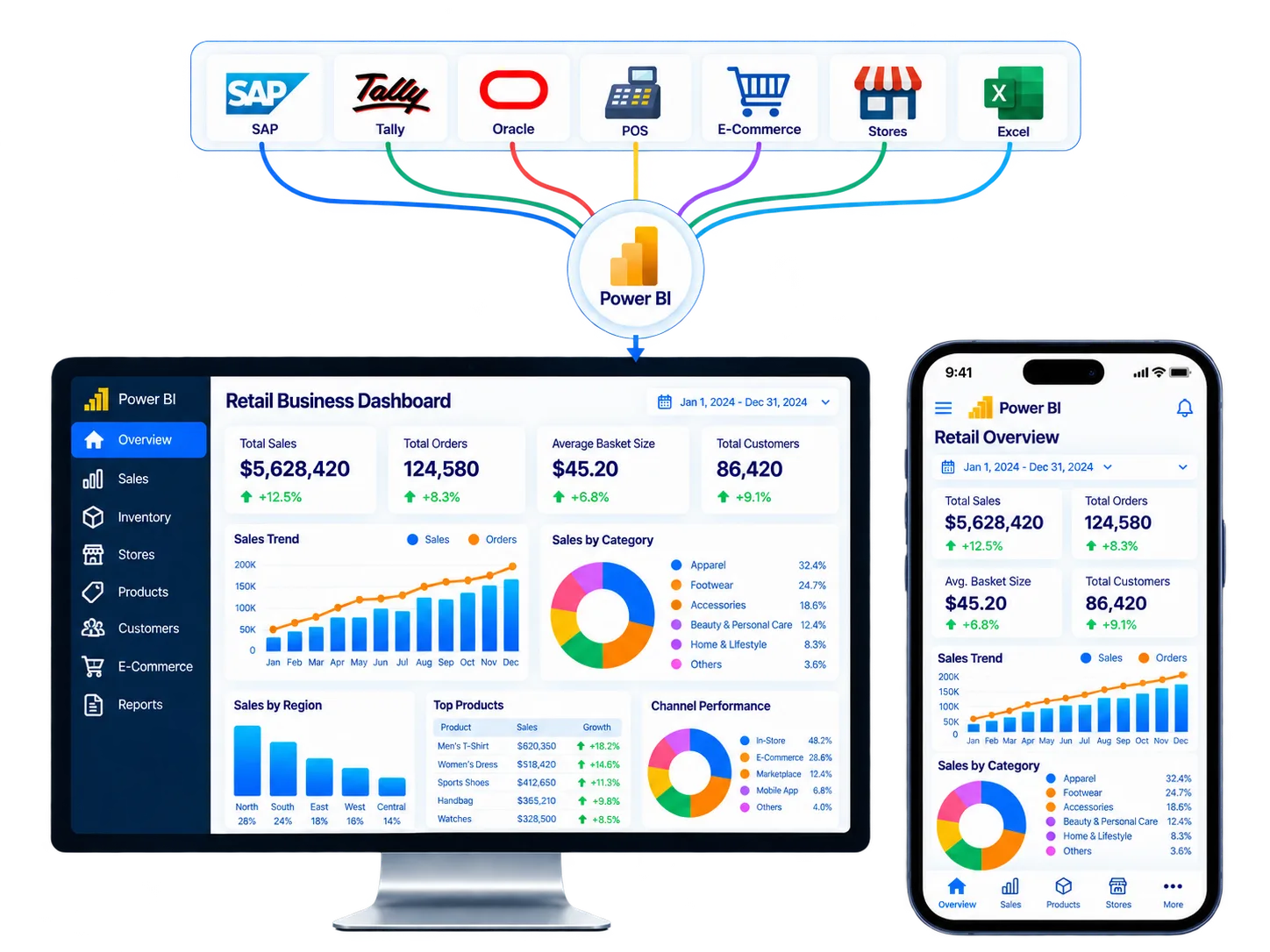






Retail Business Intelligence Services | Powered by AI
Retail teams often face delayed decisions because data is spread across POS systems, e-commerce platforms, warehouses, ERP software, accounting tools, and spreadsheets. As a result, store sales, inventory, and demand data do not always align; reports are manually prepared, and insights arrive too late to act in fast-moving retail environments.
We address this by working closely with your teams to unify historical and real-time retail data into one consistent and dependable view. Using proven retail KPIs and pre-built dashboards where applicable, we deliver custom BI solutions faster and at lower cost.
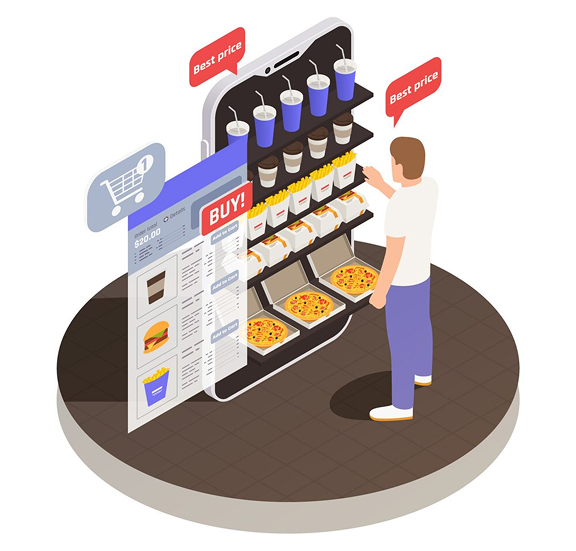
FMCG BI Personas
Retail CEO
Are You Growing Revenue or Just Inventory?
Which stores are truly profitable?
Are we losing margin through discounting?
Which 20% SKUs drive 80% revenue?
Are stock-outs silently killing growth?
Which category should we scale next?
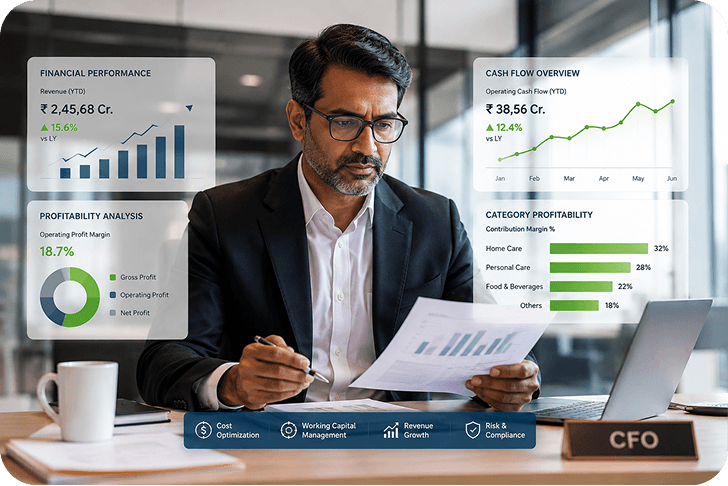
AI in BI | From Data to Action
Our BI Solution is powered by EVA, an AI-powered assistant embedded into our BI dashboards. It empowers users by allowing them to interact and communicate directly with their data. Users can ask questions in plain English and instantly receive clear, actionable insights. You can also attach external files such as PDFs and industry reports to provide additional context. Additionally, insights can be automated and delivered on a schedule through channels such as email or WhatsApp.
01
What Changed
AI in BI instantly highlights unusual changes in store sales, inventory levels, or overall performance.
02
Why It Changed
AI in BI identifies key drivers behind changes, such as demand shifts, pricing, promotions, or supply issues.
03
What To Do Next
AI in BI suggests clear next actions so retail leaders can respond quickly and confidently.

FMCG BI That Delivers Measurable Financial Impact

Reduce stock-outs by 20–40%

Cut slow-moving inventory by 10–15%

Improve category margins

Increase sell-through rates

Release working capital
Why Smart Retail Leaders Still Make Slow Decisions

Data Arrives Late
Store and sales data often reaches decision-makers too late to respond to changing performance.

Numbers Don’t Match
Sales, inventory, and finance data can show conflicting numbers across different systems and teams.

Limited Inventory Visibility
Retailers may lack clear visibility into SKU-level inventory across stores, warehouses, and locations.

Manual Reporting
Teams spend valuable time collecting, reconciling, and preparing reports instead of analyzing performance.

Demand Changes Quickly
Historical forecasts may not reflect sudden changes in customer demand, promotions, or local market conditions.

Issues Found Late
Stock, supply, and operational issues are often identified only after they begin affecting sales and customer experience.
How AI-Powered Business Intelligence Empowers Retail Leaders

Real-Time Store Sales Visibility
AI-powered Business Intelligence tracks store and online sales in real-time and highlights unusual changes automatically. Retail leaders can immediately see which stores or categories need attention during the day.

Unified View of Sales and Inventory
The BI software unifies sales and inventory data across stores, warehouses, and online channels. Leaders get a reliable view of performance without reconciling numbers across teams.

Store-Level Inventory by SKU
AI-powered Business Intelligence provides clear visibility into SKU-level inventory by store. It helps identify slow-moving items, stock gaps, and overstock situations before they impact sales.

AI-Driven Demand Forecasting
Our BI solution continuously adjusts demand forecasts using live sales, promotions, and customer behavior. Retail teams can respond faster to demand changes instead of relying only on historical trends.

Automated Reporting
AI-powered Business Intelligence automates reporting and delivers it through your preferred channels such as email and WhatsApp. As a result, teams spend less time preparing reports and more time acting on insights.

Early Supply Alerts
AI-powered Business Intelligence monitors supply and replenishment patterns and alerts teams to potential risks. Retailers can act before delays lead to empty shelves or lost sales.
Business Intelligence Use Cases Across Retail Operations
BI services deliver value across industries, but its real impact comes from how well insights are aligned with industry-specific challenges, metrics, and decision cycles. Our BI solutions built on Power BI are designed to reflect how each industry actually operates.

Inventory Optimization
Are You Carrying More Stock Than You Need or Less Than You Should?
- Eliminate dead stock draining cash flow
- Maintain optimal stock without overbuying
- Cut holding costs and storage waste
- Prevent shortages through balanced distribution
- Free up capital for growth investments
Your Retail Data Already Has the Answers
See what is changing, why it matters, and where your team can take action before opportunities are missed.
Frequently Asked Questions
Get the information you need with our frequently asked questions.
Business Intelligence services help retailers combine store sales, inventory, and customer data into one view. This gives clear visibility into what is selling, where stock is available, and how each store is performing.
BI software tracks real-time sales and inventory across stores and channels. It helps identify stock-outs, slow-moving products, and under performing stores so teams can act during the day, not after it’s too late.
Power BI services create dashboards that bring together sales, inventory, and store performance data. Retail teams can monitor KPIs, spot issues early, and make faster, data-driven decisions across locations.
BI solutions provide SKU-level visibility across stores and warehouses. This helps identify stock gaps, slow-moving products, and overstock situations early, improving replenishment and reducing lost sales.
AI in BI analyzes sales and inventory data to detect unusual patterns and demand changes. It helps retailers act early to prevent stock-outs, optimize inventory, and improve store performance.
