How a Swedish retail bank used AI agents to prepare anti-money-laundering alerts for review, cutting the groundwork for analysts while people keep every decision on whether to report.
Case Study
Oct 2026
Putting Agentic AI to Work in Swedish Bank Compliance
Overview
A Swedish retail bank with about 900,000 customers was generating roughly 9,000 transaction monitoring alerts a month, most of which turned out to be false alarms. Analysts spent much of their time collecting data from separate systems before they could start judging a case. ESS built AI agents that assemble the case file and draft a summary for the analyst. Analysts still decide whether an alert is closed or reported to the Financial Intelligence Unit of the Swedish Police Authority. Every agent step is logged and open to review. The first phase ran for eight months.
Managing High Alert Volumes Under Swedish and EU AML Requirements
The bank's compliance team of about 60 analysts reviewed alerts from transaction monitoring and customer screening. For each one, an analyst pulled account history, due diligence records, earlier alerts and screening results from five separate systems before forming a view. Expectations from Finansinspektionen and under EU rules left no room to cut corners, and the bank's model risk and internal audit functions had to be able to explain every automated step.
The key challenges included:
Heavy Alert Volumes
Roughly 9,000 alerts a month, most of them false positives, competed for the same analysts.
Manual Data Gathering
Analysts collected customer, transaction and screening data from five systems before assessing a case.
Uneven Case Quality
Case notes varied between analysts, which slowed second-line review and audit.
Regulatory Accountability
Any automation had to be explainable and auditable, and leave reporting decisions with qualified staff.
AI Agents That Prepare the Case While Analysts Make the Call
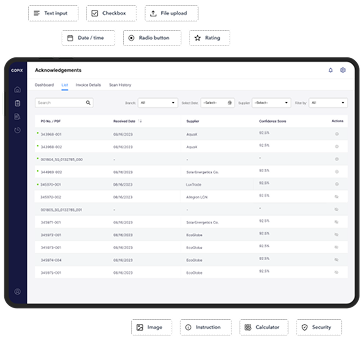
ESS built four agents that work inside the bank's existing case management tool. A triage agent scores incoming alerts against past outcomes and sets a review priority. A retrieval agent collects account history, due diligence records, earlier alerts and screening results. An analysis agent drafts a structured summary of the activity pattern, the customer's expected behaviour and what looks unusual. A quality agent checks the finished file for missing evidence before it reaches a second reviewer.
Agents cannot close an alert, file a report or restrict a customer. Low-risk alerts are grouped for an analyst to confirm in bulk, and everything else becomes an individual case with the reasoning shown. Each step, data source and model version is logged. The platform runs in an EU region in Sweden, and the controls were documented with Finansinspektionen's expectations and the EU's DORA requirements on ICT risk in mind.
Ranks incoming alerts by risk using past outcomes, so analysts start with the cases most likely to matter.
Pulls account history, due diligence records, earlier alerts and screening hits into one case file.
Draft a structured case note and flag missing evidence before a second reviewer sees the file.
Only analysts can close alerts or report to the authorities, and every agent step is recorded.
Faster Case Preparation and a Clearer Audit Trail for Compliance Teams
The client reported the following after the first eight months:
 Average time to prepare an alert for analyst review fell from about 40 minutes to under 10.
- Alerts open for more than 30 days dropped by roughly 60%, as analysts began each case with the evidence already assembled.
- Case notes follow one structure, which shortens second-line review and gives auditors a consistent record.
- Analysts spend more of their time on complex cases, and no alert is closed or reported without a named person.
For more information on how ESS can help you transform your business, please leave your contact details in the contact form or email marketing@essindia.com.
