Oracle Database Upgrade & Optimization
Future-Proof Your Business: Migrate Oracle Forms to APEX in 2026 with Skylife AI's XDO Framework

TRUSTED ORACLE PARTNER
25+
YEARS OF EXPERTISE

ZERO-DOWNTIME MIGRATION EXPERTISET
WHY UPGRADE YOUR ORACLE DATABASE?
A modern database environment strengthens your entire ERP foundation.
Our Oracle Database Upgrade Services

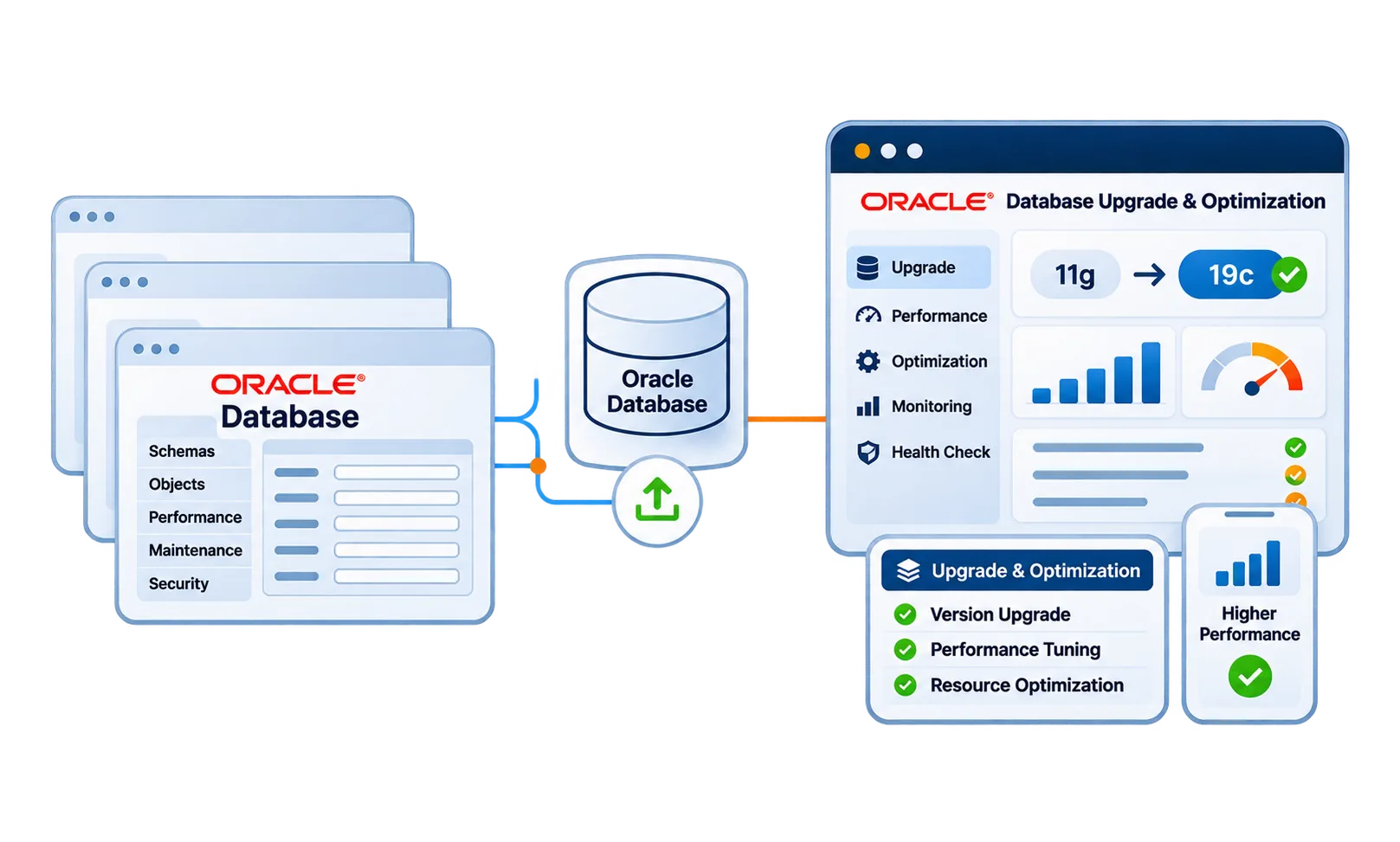
Oracle Database Version Upgrade (11g → 19c / 21c)
<p>Move legacy databases to supported Oracle versions with low-risk execution.</p>

Database Performance Optimization
<p>Resolve performance bottlenecks and improve database speed, efficiency, and resource utilization.</p>

Oracle Database Migration
<p>Move critical databases across environments with data integrity and business continuity in focus.</p>

Database Security and Compliance
<p>Strengthen database security and address access, patching, and compliance requirements.</p>

Database Health and Stability
<p>Identify hidden risks and performance issues before they impact critical business operations.</p>
Our Oracle Database Upgrade Framework
Other vendors say "migrations" but deliver headaches. Here's why we're different.

Database Health Assessment
Comprehensive evaluation of database performance, stability, and existing system architecture.

Compatibility & Risk Analysis
Identify compatibility gaps, dependencies, and potential upgrade risks before execution.

Structured Upgrade Execution
Planned and secure upgrade process with minimal downtime and controlled implementation.

Post-Upgrade Monitoring
<p>Continuous monitoring and optimization to ensure performance and system reliability.
Your Database Upgrade Is More Than a Version Change
<p>The right upgrade can become the foundation for stronger performance, improved security, cloud readiness, and future application modernization. Start with a clear strategy before making your next move.</p>
Frequently Asked Questions
The right version depends on your current environment, application compatibility, support requirements, and long-term modernization plans.
Downtime depends on the database size, upgrade approach, infrastructure, and application dependencies, which should be assessed during planning.
Compatibility testing helps identify application dependencies, deprecated features, and potential issues before the upgrade is performed.
A structured upgrade plan should include backup, recovery, and rollback strategies to reduce risk if unexpected issues occur.
Yes. Performance should be reviewed after an upgrade because queries, indexes, configurations, and workloads may require optimization in the new environment.
